1. Arrive at the starting point
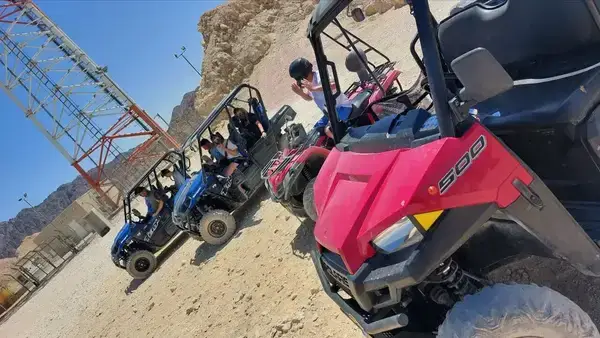
The first step is arriving on time, meeting the team, and confirming the group details. If the number of participants has changed or you have a question about drivers and passengers, raise it before the tour begins.
Bring a small bag and water: what to bring on an off-road tour.
2. Receive the safety briefing
Before the ride, the guide explains traffic rules, the distance between vehicles, how to behave on descents and at stops, and what to do if something is unclear. Do not start until every driver has heard the instructions.
3. Get familiar with the vehicle
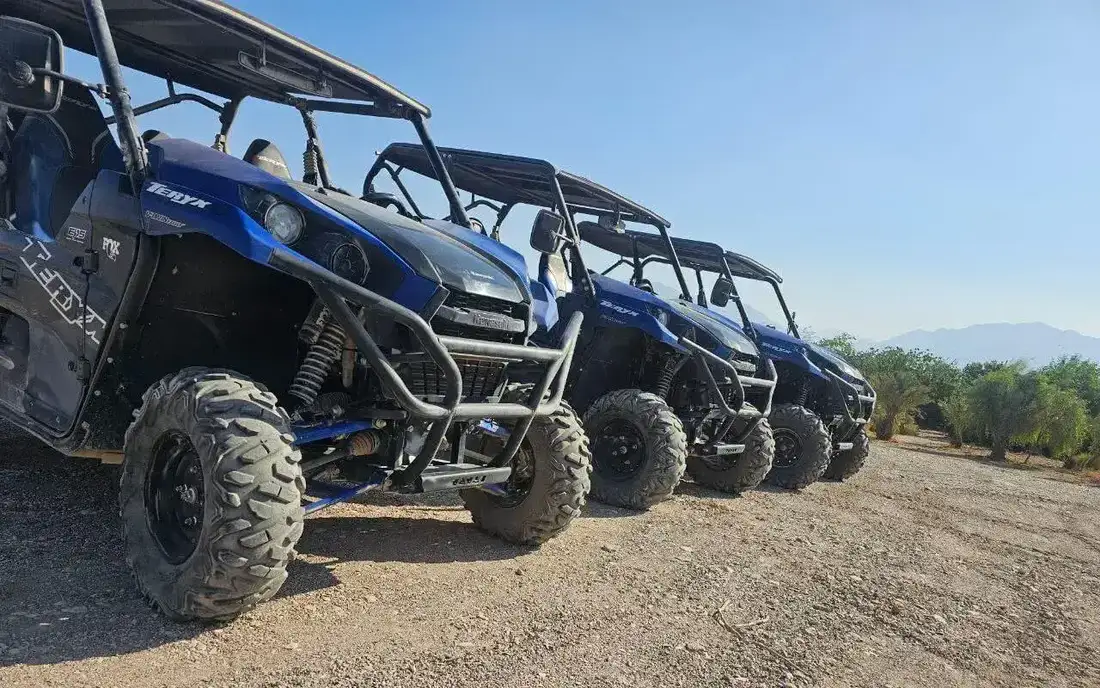
An ATV is ridden astride with motorcycle-style handlebars, while an RZR is a side-by-side vehicle with a steering wheel and seats. These differences affect the seating position, feel, and choice for each group.
See the comparison: ATV, RZR, or Ranger — how to choose.
4. Follow the guide
The group follows the guide along the route. Keep the recommended distance, match the pace to the instructions, and do not overtake or change the route independently.
5. Stop for views and photos
There are suitable stops along the route. You can drink water, take photos, and ask the guide about the area without disrupting the group.
6. Return and finish
At the end, the group returns to the starting point, follows the instructions for returning equipment, and completes the ride. If this is your first tour, ask every question in advance so you can arrive calm and prepared.
What first-time guests should know
A first off-road tour does not begin with a sudden launch. There is time to meet the team, confirm the format, and ask about the vehicles. You do not need to memorise every ATV or RZR model. Tell the team that you are new, who plans to drive, and whether your group wants a more open riding feel or a more familiar seating position.
Feeling nervous is normal. The difficult part is often not the controls themselves but the uncertainty: where to go, when to slow down, and what happens at a stop. The briefing and the guide-led convoy exist to make those steps clear before the ride starts.
What to tell the team before arrival
Prepare a short overview:
- how many adults and children are coming;
- who wants to drive;
- whether the planned drivers have valid Category B licenses;
- whether anyone has ridden an ATV, RZR, or other off-road vehicle before;
- whether anyone has a health, heat, or long-seating consideration.
This information does not replace the guide's decision, but it helps the team discuss a realistic format. Do not hide your lack of experience to seem confident. An honest answer allows the briefing to be clearer and keeps unnecessary pressure out of the group.
The briefing: what to listen for
Before departure, the guide explains the controls, following distance, movement order, and behaviour at stops. Listen for signals from the lead vehicle, instructions for climbs and descents, and what to do if you lose visual contact with the group.
If something is unclear, ask for it to be repeated before the start. Do not expect a question to solve itself once the vehicles are moving. A briefing is not a formality; it is where the group agrees on a shared pace and common rules.
How an ATV and an RZR feel different
On an ATV, the driver sits astride and uses motorcycle-style handlebars. The ride feels more direct and requires active body positioning. An RZR is side-by-side: driver and passenger sit next to each other, with a steering wheel, pedals, belts, and a roll cage. That layout often feels more familiar to people used to cars.
Neither option is automatically better. The choice depends on whether you want to feel each change in the terrain, how confident you are with the controls, and who will ride beside or behind you. See the detailed ATV, RZR, or Ranger comparison.
Following the guide
After the start, keep the required distance and follow the lead vehicle. Do not overtake, change direction sharply, or try to move faster than the group pace. An off-road route is not only about speed: the terrain, stops, views, and calm reactions are part of the experience.
If you fall behind, feel confused, or are unsure about the next manoeuvre, slow down and use the signal explained in the briefing. Do not continue blindly. The guide manages the route; your job is to follow the instructions and report a problem early.
Stops and photos
Stops are there to drink water, look at the landscape, and take photos. Keep your phone secure, and take photos only after the vehicle has fully stopped and the guide has made it safe to do so.
Do not leave the vehicle or group for a better angle, and do not stand on a seat for a photo. The desert looks impressive without risky poses. The what to bring checklist helps you prepare the phone and small items before arrival.
If something feels wrong
Do not wait until the end. Tell the guide if you need a clearer explanation, a short pause, or help with the seating. This is normal communication, especially for a first-time guest. The group can move comfortably only when everyone understands what is happening and follows the rules.
If you are a passenger, agree on simple signals with the driver: when you need a stop, when the pace feels uncomfortable, or when you need to adjust something. In an RZR or Ranger, remain belted and do not change position while moving.
After the ride
Once the tour is finished, you can ask about the route, vehicle, and possible formats for a future visit. After a first experience, it is easier to decide whether you prefer the open feel of an ATV, side-by-side seating in an RZR, or the family-oriented Ranger.
Do not choose a more extreme format only to prove something. Choose it because it matches the interest and readiness of your group. Arrive without rushing, listen to the briefing, and communicate with the guide at every stage. That turns the first tour into an adventure rather than a test of courage.
Andrey Tereshchenko
Lead Instructor & Safety Director · 15+ years
More about the senior instructorCommon Questions About a First Tour
Do I need previous experience?
What happens before departure?
Can I choose between an ATV and an RZR?
Related articles
What to Bring on an ATV or RZR Tour in Eilat
A short preparation checklist for an off-road tour in Eilat: what to pack, what to leave behind, and what to confirm before arrival.
Read the Article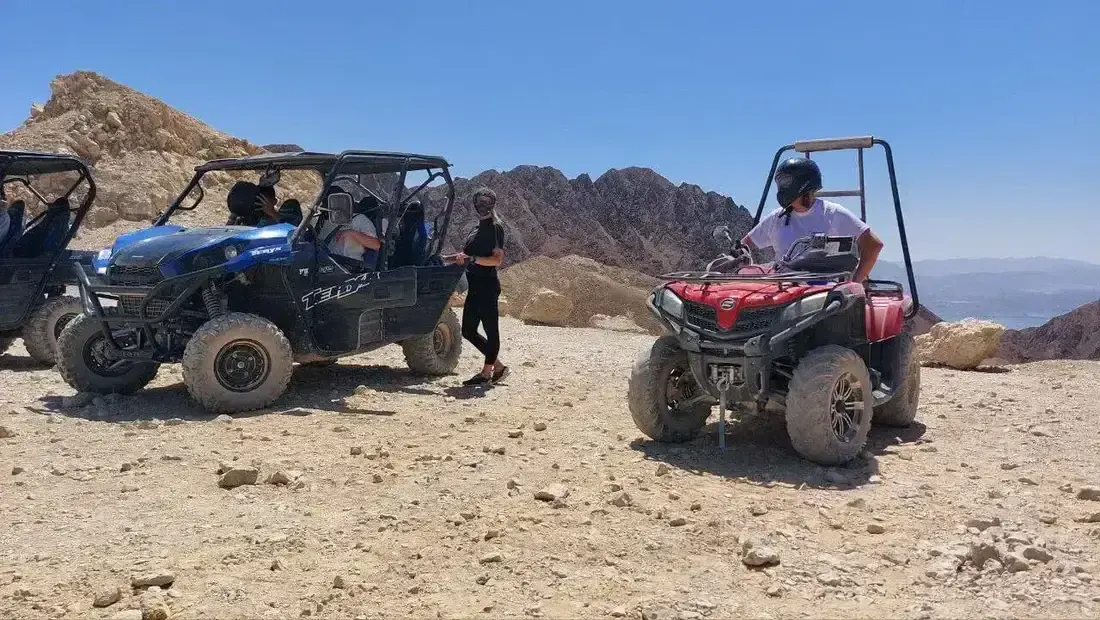
ATV, RZR, or Ranger: How to Choose Your Vehicle for an Eilat Tour
What's the difference between an ATV, an RZR buggy, and a Polaris Ranger: seating, license requirements, passenger age, and who each vehicle suits. A comparison from U-Drive Eilat.
Read the Article